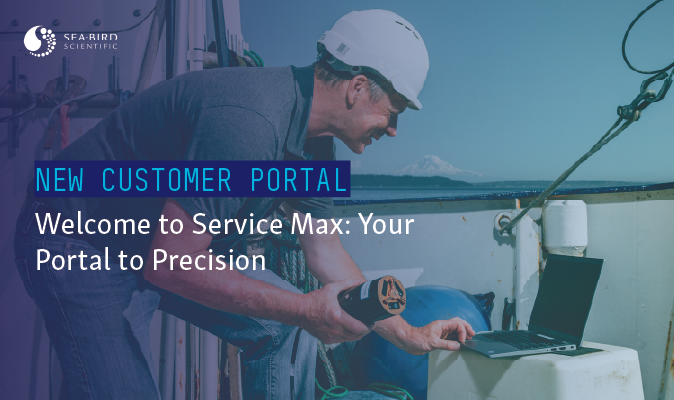
Case Study: Exploring the Use of the Deep SeapHOx™ V2 pH Sensor for Freshwater Insights

Overview
This case study was developed in partnership with the University of Washington (UW) Ocean Technology Program. Sea-Bird Scientific partnered with Sasha Seroy, Ph.D. and a select group of students at UW to explore the use of the Deep SeapHOx™ V2 pH sensor in freshwater environments. The deployment took place across approximately seven months from October 2024 – April 2025.
Instruments and equipment used in this case study:
- Sea-Bird Scientific’s Deep SeapHOx™ V2 pH sensor
- Custom pH Spectrophotometer (utilized as a validation tool)
- Niskin bottles
Partners involved in this research:
Sea-Bird Scientific
- Charles W. Branham, Ph.D. | Principal Chemist
- Marialena Christopoulou, Ph.D. | Customer Support Scientist
University of Washington
- Jood M. Almokharrak | Student
- Paige McKay | Student
- Roy An | Student
- Sasha Seroy, Ph.D. | Assistant Teaching Professor, Lead of Ocean Technology Program

Charlie Branham, Principal Chemist at Sea-Bird Scientific, gives an overview on deployment methods for the Deep SeapHOx™ V2
CONTACT US
Experiential Learning at the University of Washington’s Ocean Technology Program
The oceanography program at the University of Washington is recognized as a global leader for research and development, providing a unique experience for students to understand and analyze the inner workings of the world’s oceans. Theoretical knowledge is essential in this field, but experiential knowledge is critical to ensure that graduates from oceanography degree programs can confidently go out into the world to utilize the knowledge and skills learned. That’s why the Ocean Technology Program at the University of Washington (UW) was created – to help bridge this gap between practical and theoretical knowledge and prepare students for careers after graduation. Learning how to deploy and troubleshoot technical instrumentation in the field, process data, and then interpret findings into real-world impact, gives students a tangible experience that enables them to more seamlessly transition into a full-time career.
Partnering with the University of Washington to Advance Ocean Science
Sea-Bird Scientific is passionate about bridging the gap between graduation and full-time employment for students pursuing a career in oceanography or ocean science. Oceanographers, scientists, engineers, and researchers all sit in different areas within Sea-Bird Scientific, and through their personal career paths, each of them recognizes that it is essential for students to acquire relevant and valuable field experience prior to moving into a career. Therefore, it is a core focus for Sea-Bird Scientific to engage with the local community to provide education, training, and mentorship to the next generation of oceanographers and scientists. As Charlie Branham Ph.D., Principal Chemist at Sea-Bird Scientific notes,
“We also have an outreach goal at Sea-Bird (Scientific) to work with undergraduate and graduate students to drive their education and get them involved with industry early so that they can have an idea that there’s different road maps to different careers within the oceanographic sciences.”
Sea-Bird Scientific was proud to partner with Sasha Seroy Ph.D., Assistant Teaching Professor and Lead of the Ocean Technology Program at UW, and three students to co-develop a study aimed at exploring the use of the Deep SeapHOx™ V2 pH sensor in freshwater environments. While the initial goal of this collaboration was to understand the technological capabilities of the Deep SeapHOx™ V2, Seroy emphasizes that one of their goals alongside the technological capabilities piece was,
Sea-Bird Scientific is grateful to have the opportunity to train and support students in our community who will go on to become the next generation of ocean scientists.
Research Design & Methodology
Measuring pH is a critical piece in assessing the health of aquatic ecosystems. In the case of ocean pH – decreasing pH, also known as ocean acidification, disrupts the ability of some marine organisms to adequately build their shells and skeletons.
As Roy An, oceanography student and member of this study, so aptly calls out regarding pH;
“…it’s a proxy to analyze marine ecology and health.”
Sea-Bird Scientific’s Deep SeapHOx™ V2 pH sensor was chosen for this research to assess the accuracy and long-term stability of ISFET pH technology in a freshwater environment. The results of this explorative research have provided critical insights for determining if this technology could reliably be adapted for use in freshwater applications.
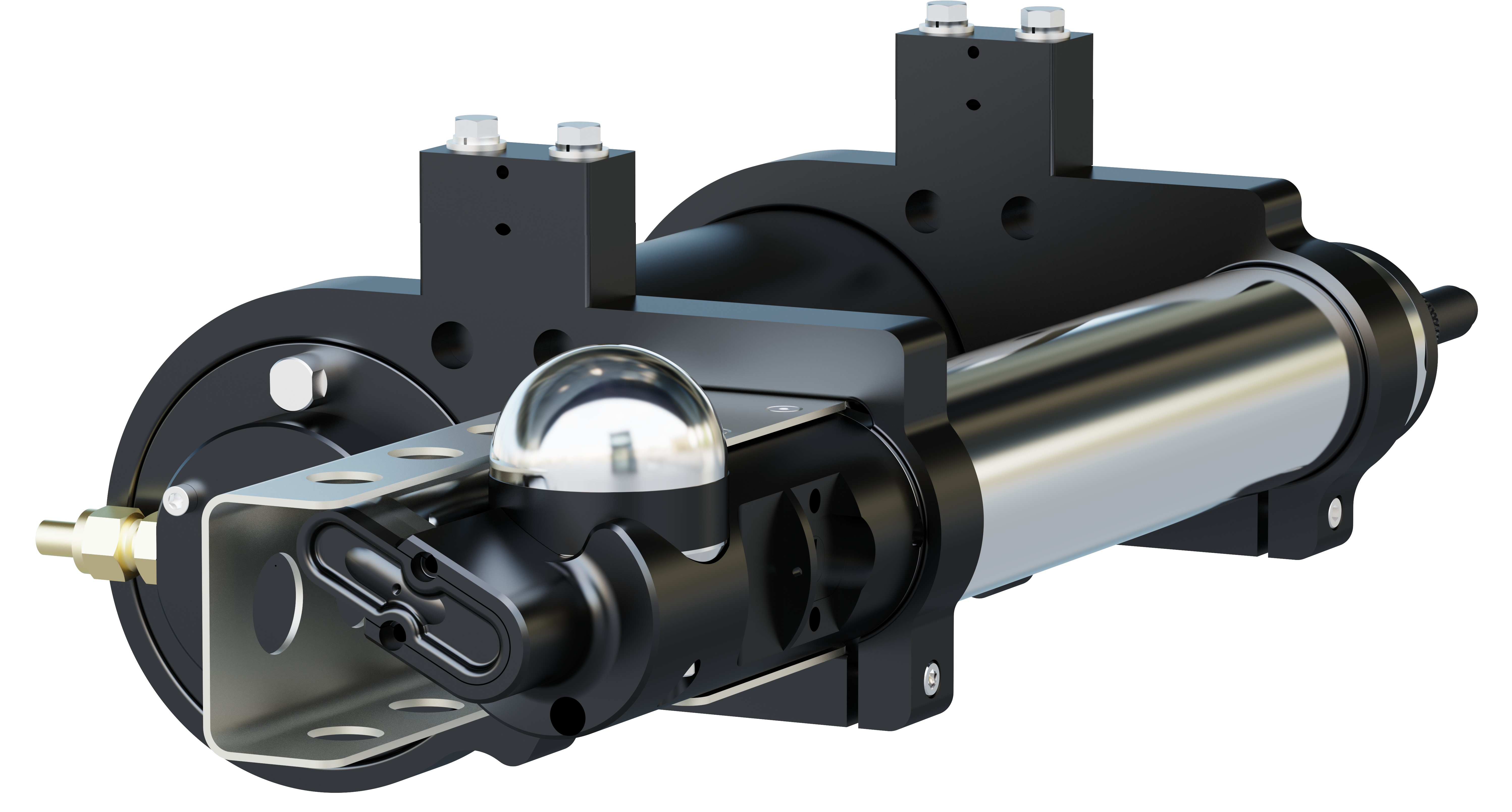
Sea-Bird Scientific’s Deep SeapHOx™ V2 combines the trusted SBE 37-SMP-ODO MicroCAT with a Deep SeaFET pH sensor
The Sea-Bird Scientific team composed of Charlie Branham Ph.D., Principal Chemist, and Marialena Christopoulou Ph.D., Customer Support Scientist, collaborated with the UW team on every step of the experimental planning for the deployment of the Deep SeapHOx™ V2. During this process, the Sea-Bird Scientific team had the pleasure of training the students on the end-to-end process of designing an experiment – from creating the study plan that includes defining the methodology around how to actually deploy the instrument and validate measurements, to processing the data for environmental insight.
Since the operating procedures for the Deep SeapHOx™ V2 are only designed for deployment in marine environments, the students worked closely with the Sea-Bird Scientific team to define best practices for freshwater environments. As Paige McKay, student at UW notes,
To enable easy access to the equipment for both the University of Washington team as well as the Sea-Bird Scientific team, the Deep SeapHOx™ V2 was strategically deployed off a dock owned by the University of Washington, where it remained moored from October of 2024 through April of 2025 at a depth of 3 meters. Not only did this deployment site enable the team to monitor the equipment, but the urban setting also exposed the instrument to unique activities with direct impact on local water quality, driving insight into broader scientific applications.

Map courtesy of Google highlighting the deployment site for the Deep SeapHOx™ V2 at the UW Marine Science Building dock
To validate findings, the team used both in-field and laboratory measurements. For the laboratory reference pH measurements, biweekly water samples were collected from the same location that the Deep SeapHOx™ V2 was moored using Niskin bottles. The water samples were further distributed into smaller glass flasks, and the students were tasked with ensuring that no bubbles were present during collection to avoid errors in the pH spectrophotometer measurements. The flasks were stored in a cooler to maintain their temperature and taken directly to the lab at Sea-Bird Scientific to be analyzed using a spectrophotometric pH analysis, following the method described in Easley and Byrne (2012)¹ . High-accuracy lab comparisons are critical to understanding the validity of measurements used in this research. As explained by Jood M. Almokharrak, student at UW:
“…to be able to connect students with industry, and have them understand the process of sensor development, and what considerations go into conducting research as far as testing technology and assessing it, and making sure we can match the technology with the science that it will ultimately do – and provide networking opportunities for these students.”
Using Python for data visualization, the students regularly compared measurements from the Deep SeapHOx™ V2 with the reference pH water samples processed in the lab.
Results
From the thorough assessment and comparison with the laboratory reference specifications, through adjustments to the data, the team found that the Deep SeapHOx™ V2 pH sensor performed successfully in freshwater environments when appropriate corrections were applied, achieving accuracy within 0.05 pH units.
This result, coupled with other insights gained from the experiment, drives innovation in deployment methodology and technology that can be adapted to other environments where pH is a critical parameter for understanding ecosystem health. The insights gained can be adaptable to other environments and, as Jood M. Almokharrak highlights,

To share these insights and gain experience in communicating results, UW students Jood M. Almokharrak, Paige McKay, and Roy An designed a research poster that was showcased at the University of Washington 2025 Undergraduate Symposium. Furthermore, the Deep SeapHOx™ V2 data was shared with and utilized by students affiliated to the UW ERIS (Exploration and Remote Instrumentation by Students) program for intercomparison with their active time series of CTD (conductivity, temperature, depth) sensor data. Additionally, the data collected from this study was also used by students in the Ocean 351 class as part of a final project.

Student exhibition at the Undergraduate Symposium at the University of Washington. From left to right (Roy An, Jood M. Almokharrak, Sasha Seroy Ph.D.)
In addition, Paige McKay will present this research in September of 2025 at the OCEANS Conference in Chicago. Following her presentation, the white paper will be published and available for more technical details about the research.
The Impact of Partnering with the Next Generation of Ocean Scientists
Both Charlie Branham, Ph.D., and Marialena Christopoulou, Ph.D., developed a close relationship with this group of undergraduates throughout the duration of this study. When reflecting on their partnership with the students, Charlie Branham mentioned,
“…I was really proud of how the students took on this challenge and were able to take the bottle samples as well as they did.”
The Principal Chemist notes that taking freshwater samples for pH analysis is not easy. Unlike seawater, freshwater has low conductivity and limited buffering capacity. This can lead to noisy and unstable pH readings when not managed well. Providing a structured setting for students to experience and respond to challenges such as these lays the foundation for critical thinking and problem-solving skills that can be utilized in-situ later on in their careers. Sasha Seroy Ph.D., shared that these types of partnerships,
“…enable [students] to tackle a problem that industry scientists are thinking about.”
Partnerships like this between industry and academia provide an avenue for knowledge sharing of best practices, give insight into trends and what is coming next in the industry, and provide students with tangible learning experiences. It enables students to familiarize themselves with high-performance instrumentation that they will potentially use in their careers. Furthermore, it showcases the different forms an oceanographer’s career can take – whether it be within academia, industry, or otherwise – it showcases the diversity in career paths a single degree can provide within the ocean science and ocean tech space.
When thinking about the implications of this study on their career paths, all three of the students noted that this research enabled them to develop connections in the industry. Paige McKay notes that she is,
“…now more interested in the research process itself, and understanding the calibrations, and all of the thought that has to go into designing sensors.”
Understanding what various instruments and technology they are used for, as well as the science behind the measurements, is incredibly useful for students looking to become a Marine Technician after graduation, like Paige McKay aspires to.
Not only do these types of partnerships support student growth, but they also enable Sea-Bird Scientific to grow and advance for the betterment of ocean science. As Marialena Christopoulou, Ph.D., mentioned,
“…having the opportunity to interact with students, especially the younger generation of oceanographers, and understanding how they see our scientific field, understanding their needs, and how they can use our equipment better is very important as well for us in the industry.”
Sea-Bird Scientific looks forward to a continued partnership with the University of Washington and is excited to be actively collaborating with the Ocean Tech program to define the next research initiative.
Acknowledgements
A special thank you to the University of Washington and Sea-Bird Scientific teams – Rick Rupan, UW, for facilitating the collaboration, the UW Ocean Technology Program for resources, and UW Oceanography for dock space, alongside Senior Product Manager at Sea-Bird Scientific, Natalie Zielinski, for sensor access and lab equipment.
References
¹Easley, Regina A., and Robert H. Byrne. “Spectrophotometric Calibration of PH Electrodes in Seawater Using Purified M-Cresol Purple.” Environmental Science & Technology, vol. 46, no. 9, 11 Apr. 2012, pp. 5018–5024, https://doi.org/10.1021/es300491s.